
Software rebuilds
I replace the ageing tools your team works around with one platform built for how you actually work. Your data comes with you, the switchover is rehearsed, and the price is fixed before the build starts.
Most small businesses never decide to replace their software. They just keep working around it, an hour at a time.
Every client, job or order gets keyed into more than one system, by hand.
Records lock while someone's editing them, or the software only runs on one computer in the office.
The real process lives in spreadsheets and people's heads, around the edges of the software.
Documents sit in shared drives, unlinked to the client or job they belong to.
No reminders, alerts or workflows. Someone has to remember everything.
The history in those systems is the business. That's what makes switching feel too risky.
Not sure what it adds up to? Work out what your old software costs you, in about two minutes.
A Paris recruitment agency, four systems and nine years of data.
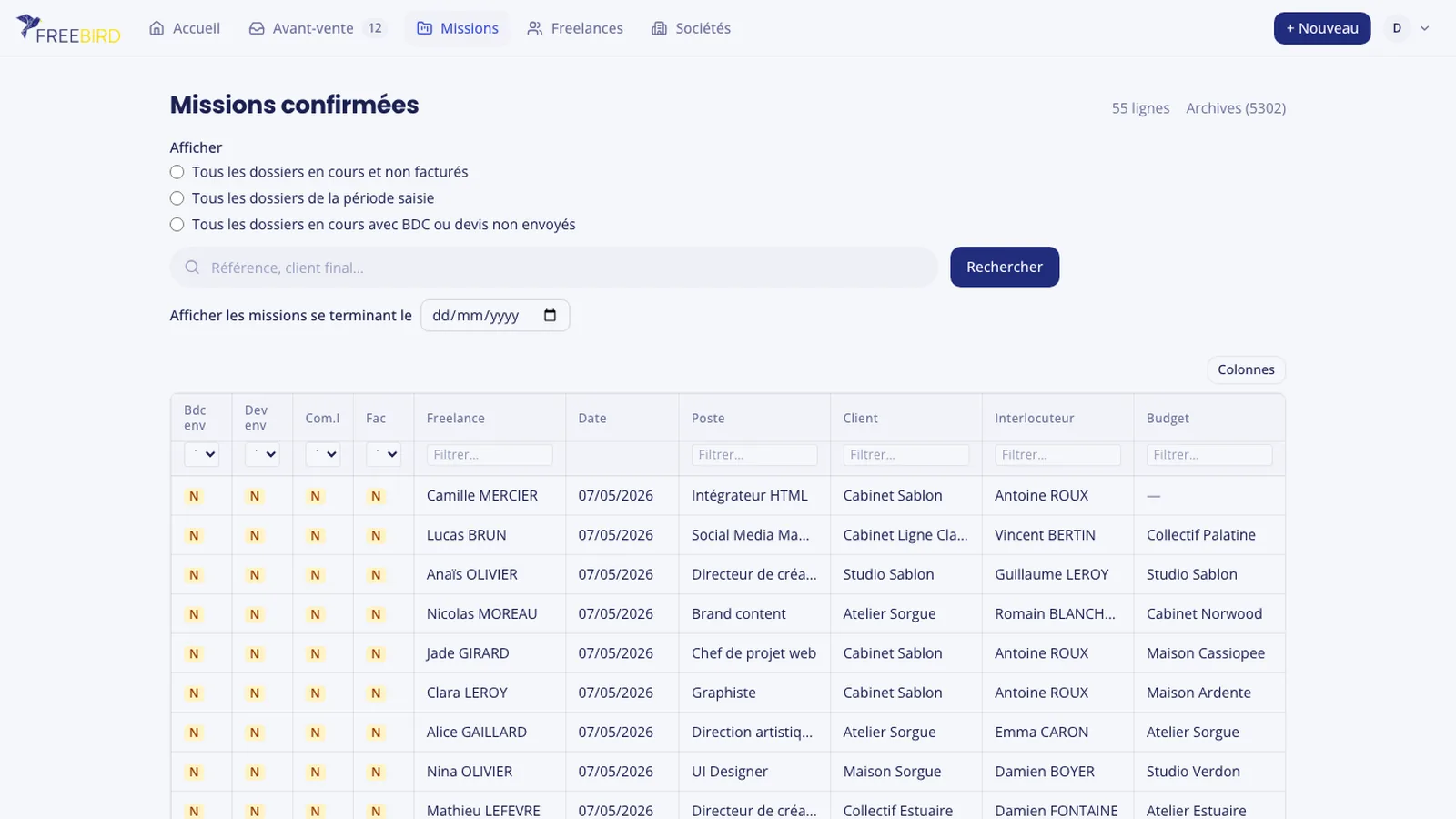
Freebird's four people were losing eight to twelve hours a week to double entry. Every mission meant at least eight manual entries across four systems, and one of them ran on a single Windows machine in the office. I audited the setup, built one platform in its place and carried the whole history across.
Before the switchover: four full cutover rehearsals, with the team checking its own data in the new platform.
The rebuild, and everything around it.
Building new software is half the job. The other half is moving years of data across, connecting the tools you keep and switching the team over without losing a day's work. Most small businesses have no IT team or integrator to hand that to, so it's all included.
Every rebuild starts with an audit of the systems you run on today, and the price is fixed before the build begins.
It depends on how many systems you're replacing and how much data comes with them. The audit sets the timeline along with the price, so you know both before the build starts.
A fixed price for the scope agreed in the audit, so there are no day rates and no open-ended invoices.
No. The audit sorts the tools that earn their place from the ones that don't. The ones that work stay, and the new platform connects to them.
All of it comes across, with its history. Your team checks its own records in the new platform before anything switches off, and the old systems stay as they are until the switchover.
It suits small businesses and agencies whose work runs through records: clients, jobs, bookings, people and invoices. You don't need an IT team or an integrator. If the audit shows off-the-shelf software would do the job, I'll tell you.
We'll start with a call about how your business runs today. Nothing to prepare.